









Fishers are returning to Ohio! Fishers were once common in Ohio- a native species. However, by the mid-1800s the fisher was extinct in Ohio. A victim of habitat loss, the forests they needed were cleared for agricultural land, and the fur trade. The first confirmed fisher sighting was in 2013. To date ODNR has received more than 40 confirmed fisher sightings across several counties, including Ashtabula, Columbiana, Cuyahoga, Geauga, Harrison, Jefferson, Lake, Mahoning, Trumbull, and Tuscarawas. Most of these sightings were in the last three years. Ohio is benefiting from the expanding fisher populations in our neighboring states. In the 1990’s fishers were re-introduced to Pennsylvania and West Virginia. From these two states fishers have been naturally migrating into Ohio. The forest habitat they depend on has been steadily returning to Ohio – nearly a million acres of forested land has been added to Ohio since 1970. Scientists also believe that Ohio fishers may be reproducing. Their belief is based on the examination of a pregnant female killed on the road. To date, no living young have been confirmed. So, what is a fisher? Fishers are nocturnal, carnivorous, fur-bearing, forest-dwelling mammals. Found only in North America, they are secretive, solitary hunters. They are sometimes referred to as “fisher cats.” However, they are not cats and they don’t eat fish. Fishers belong to the Mustelidae or weasel family. There is no definitive answer to why this animal is called fisher. It’s though that the name fisher is a lost-in-translation corruption of the name given to them by the early French fur-trappers. To them our weasel’s fur looked like the European polecat’s fur that they were familiar with. The French name for polecat is fiche. Over time fiche became fisher. Fishers are the second largest member of the weasel family in North America after the wolverine. They have long, slim bodies, short legs, rounded ears, thick brown to black fur and bushy tails. They have five toes on each foot and unsheathed, retractable claws. Their large feet allow them to move easily across snowpack. They are exceptional tree climbers. Fun fact: They can rotate their back paws almost 180 degrees – this allows them to descend trees headfirst. Not many mammals can do that! With its speed, agility, sharp claws, and teeth fishers are known to be extremely successful land and tree predators. They play an important role as mid-sized predators helping to control rodent populations. However, being opportunistic carnivores, their diet can adapt as needed to include birds, snowshoe hares, squirrels, reptiles, insects, carrion, vegetation and fruit. They are one of the rare animals that will hunt and kill porcupines. Fishers seem to be filling, at least in part, a role left vacant when top-tier predators, wolves for one, disappeared from their native ranges. Because fishers rely on connected, mature forests, protecting fishers also protects critical habitat for many other species – contributing to a healthy biodiversity. Forest ecosystems that include a healthy fisher population are a positive sign of a well-functioning, mature environment. So, fishers returning to Ohio is a very good thing, making our forest ecosystems one species stronger and more resilient. The fisher needs one more thing to succeed and thrive – the dark of night. Light pollution or skyglow can reach hundreds of miles from the urban area creating the pollution. It can reach into areas where fishers live and interfere with their hunting, mating, rearing their young – everything they do during the night. Light pollution is one challenge to the fisher’s success that everyone can do something about. Written by Robin Gill, Astronomy Education Specialist
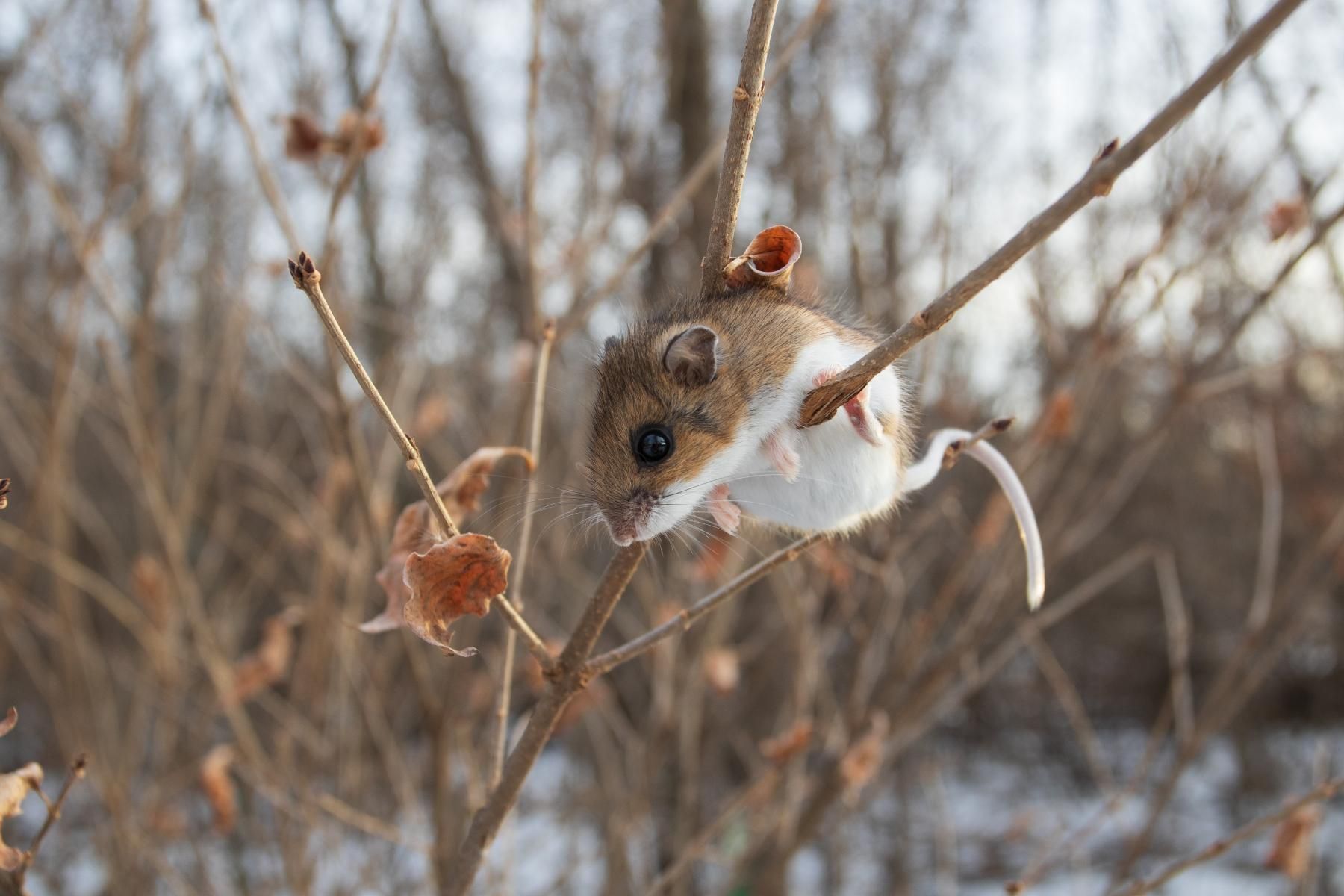
Happy #WildlifeWednesday! Let's talk about Ohio mice. Most of us are probably all too familiar with a cute but typically unwanted rodent guest, the house mouse. Though still considered a wild animal, the house mouse has adapted so well to living near humans that it is categorized as a synanthrope. Synanthropes benefit from living near human settlements and include animals such as brown rats, cockroaches, pigeons, gulls, geckos, spiders, and centipedes. The house mouse is accustomed to people to the extent that it has even been domesticated as the pet "fancy" mouse and as the laboratory mouse. But Ohio also is home to two species of deer mice, the eastern deer mouse and the white-footed mouse. These species are found in habitats such as fields, woods, forests, and agricultural edges. Deer mice get their name for two main characteristics: their two-toned fur coloration and their high agility. The fur coats are brown to reddish brown on the top of the animal, with stark white on the underside and belly, resembling the pattern of a white-tailed deer. They are athletic and nimble and able to gracefully leap and bound, also similar to a deer. Primarily nocturnal, deer mice are fairly social and will often nest together in groups of ten or more. They communicate through vocalizations, scent marking, grooming, and drumming. The drumming behavior is an alarm signal to other mice and is accomplished by stamping their forelegs on hard surfaces, hollow reeds, and dry leaves. They are omnivores, their diet including nuts, seeds, berries, fruit, insects, fungi, and carrion. They are known to stockpile enormous caches of food, particular seeds and nuts, for consumption during the winter. Be sure to keep your ears open for the drumming sound of a deer mouse in the Enchanted Forest ! Written by Michelle Leighty, TWC Environmental Education Specialist