

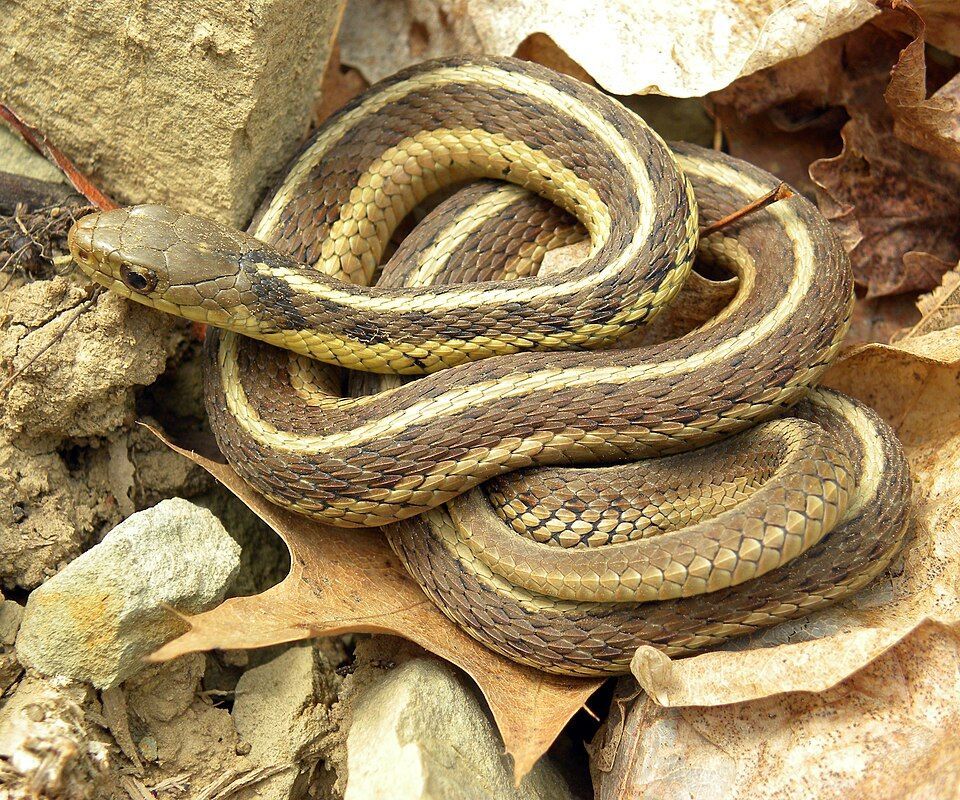
Happy #WildlifeWednesday! The recent warm sunny weather has made reptiles extra active and many snakes have been spotted sunning themselves on the trails! They need to catch some rays while they can, as the approaching weeks will lead to temperatures that are too cold for them. Have you ever seen a snake in the winter in Ohio, slithering through the snow? Probably not. So where do they go? Reptiles like this garter snake will enter a state of dormancy called “brumation.” Brumation is similar to hibernation in mammals, but with a few differences. Reptiles do not build up fat stores the way mammals do for hibernation. Instead they increase the amount of glycogen (sugar) in their system, which keeps their muscles in good condition so that they are ready to move when spring comes. Their brumation site should be close to water, as they will periodically get up during the winter to drink. While they do need to keep hydrated, their metabolic activity is greatly decreased causing them to move sluggishly, and they do not need to eat. In fact, if they consume too much before winter it can be dangerous because they cannot digest the food quickly in the cold and their stomach contents could rot. Some snakes brumate alone in their dens, while others such as the garter will engage in communal brumation, spending the winter in a hibernaculum with a large number of other snakes. Garter snakes are enormously social and will den together both for warmth and the pleasant company. Written by Michelle Leighty, TWC Environmental Education Specialist
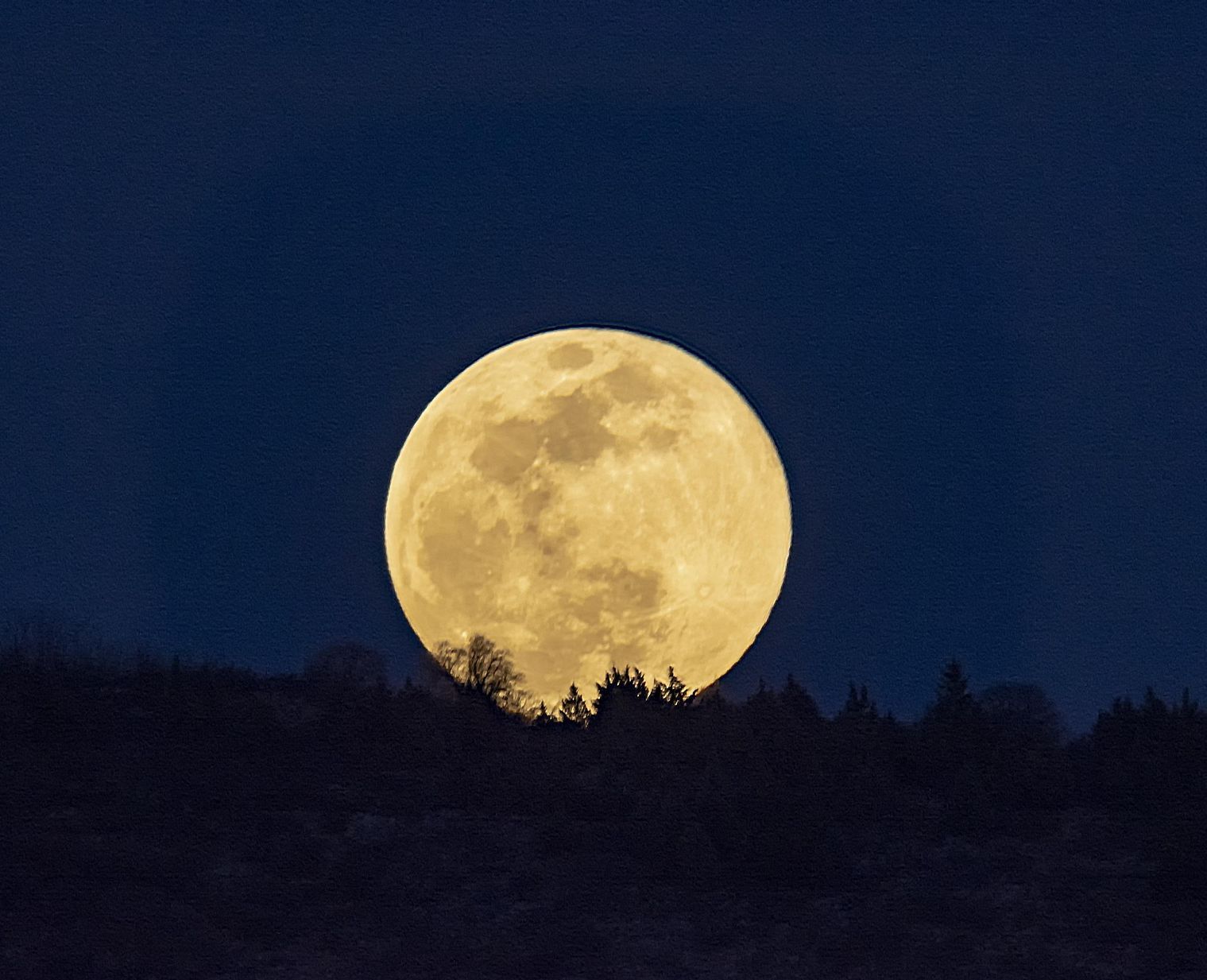
October’s full Hunter’s Moon occurs at exactly 12:11 AM EDT on Monday, October 26th, 2026. Even though the Moon reaches its peak illumination a bit after midnight, to our eye it will look full and bright when it rises at 5:56 PM EDT on Sunday, October 25th. In fact, it will also look full and bright on October 26th and October 27th. The reason for this is when a full moon occurs close to the autumnal equinox, its orbital path makes a shallow angle with the horizon. The full Moon names we’re familiar with have been used for generations. They originated from Native American, Colonial American, and other sources such as European names for the Moon. Many full Moon names are English interpretations of Native American full Moon names. Native Americans didn’t have calendars to keep track of time. Instead, they tracked time by observing the seasons and the lunar cycle. Being keen observers of their environment, their full Moon names described what was going on in nature around them. The Harvest and Hunter’s full Moons are unique in that they don’t follow tradition, instead of being tied to a specific month they’re tied to an astronomical event - the autumnal equinox. The Harvest Moon is the full Moon that occurs closest to the autumnal equinox date September 21st or 22nd and the Hunter’s Moon is the first full Moon after the Harvest Moon. Most years the Harvest Moon occurs in September; every three years it falls in October. If the Harvest Moon falls in October, the September Moon is called the Corn Moon and the November full Moon becomes the Hunter’s Moon. This was not one of those years. (It should be noted that this naming convention is not according to Native American tradition. In Native American tradition the September full Moon is the Corn Moon, the October full Moon is the Hunter’s Moon, and the November full Moon is the Beaver Moon.) Using the light of the full Hunter’s Moon, hunters could hunt late into the evening, allowing them more time to prepare for winter. Since full Moon names depended on the tribe and where they lived, a full Moon may have several names. So, although Hunter’s Moon is the most common name for October’s Moon there are others. Some of these include the Travel Moon, perhaps because birds and other animals were migrating or perhaps because northern Native American tribes would move down from the mountains for the winter. The Dakota peoples called it the Drying Rice Moon as this was the time to dry rice for storage, the Cree called this Moon the Migrating Moon, the Anishinaabe called it the Falling Leaves Moon, and the Ojibwe called it the Freezing Moon as temperatures become increasingly cold. The October 25th full Moon will rise as the Sun sets, and it will be easy to see as it will be a golden, orangish, or reddish color as it rises above the horizon. And it will appear large to our eye. On this night there is a bonus with the Hunter’s Moon, the planet Saturn is the bright object to the right and up from the Moon. Take a night hike and enjoy all nature has to offer under the full Hunter’s Moon. The days are getting shorter and the nights chilly – perfect for watching the full Hunter’s Moon rise. When the Moon is low in the sky the sunlight reaching it is travelling through more of the Earth’s atmosphere. The atmosphere scatters shorter wavelengths of light like blue and violet and lets longer wavelengths of light like red and orange pass through (this is called Rayleigh scattering). The longer wavelengths of light bend around the Earth and hit the Moon. The Moon in turn reflects this light back to our eyes. As the Moon rises it will return to its white-silvery color as we look through less atmosphere. The Moon appearing large on the horizon is called the Moon Illusion. When the Moon is low on the horizon our brains compare it to things like trees, buildings and other objects in the foreground, this tricks our brain into thinking the Moon is much farther away and physically larger. But it’s all an illusion, the Moon is always the same size whether it’s on the horizon or high overhead. If you don’t believe this, try this test – hold your thumb out at arm’s length place it over the Moon – your thumb will cover the Moon completely no matter where it is in the sky. Written by Robin Gill, Astronomy Education Specialist
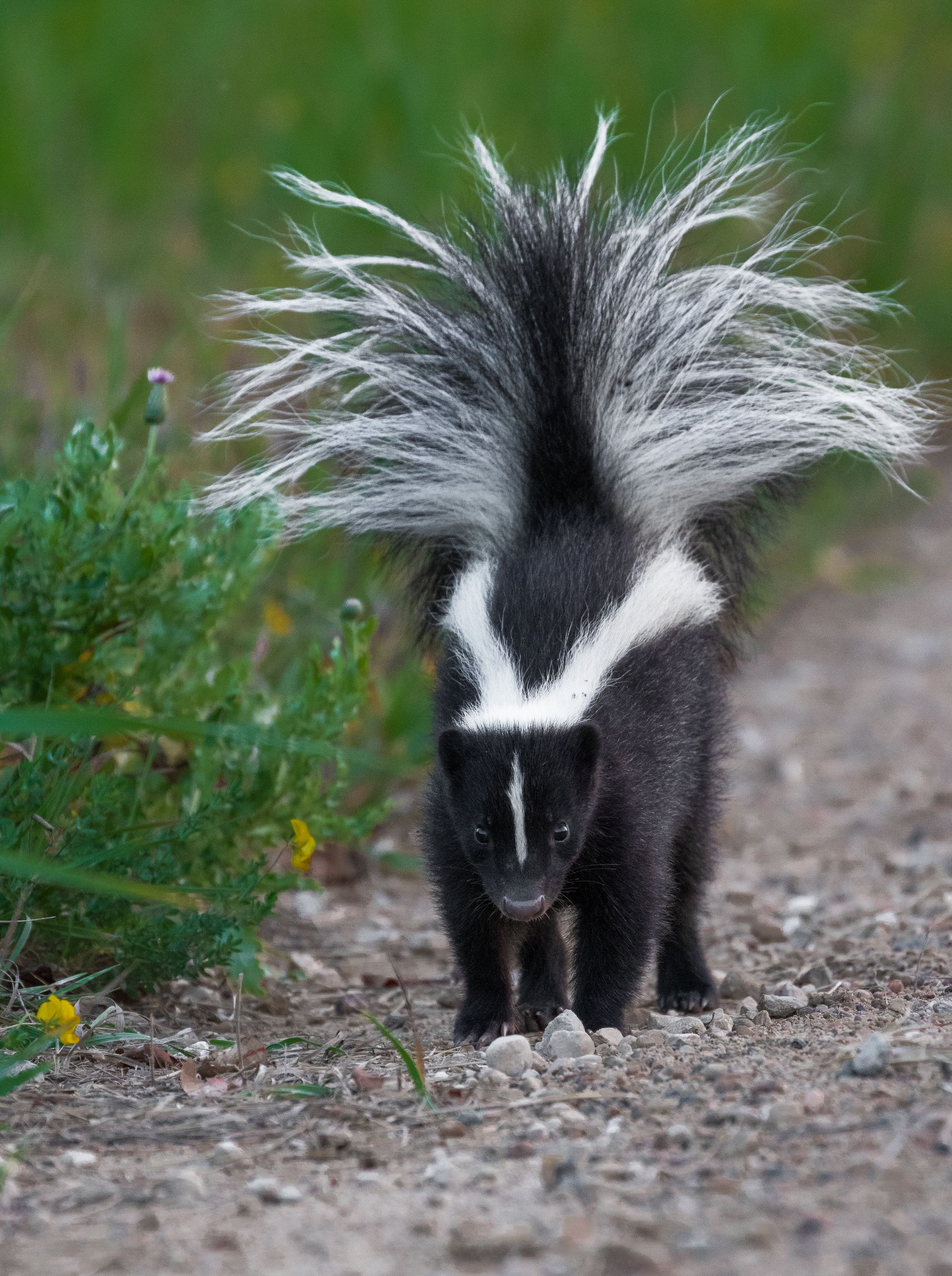
Happy #WildlifeWednesday! Today we will learn about a nocturnal animal that wants to be seen, smelled, and recognized…the striped skunk! While many animals use camouflage, burrows, and fleeing to hide from predators, the skunk does not rely on any of these. Instead, its strategy is to stand out, showing off the bright white stripes along its black back and bushy tail, a sight that animals who have encountered skunks before learn to avoid. Because upon encountering a skunk, an elaborate warning display of foot stamping and stomping will begin. The tail will rise, the back will arch, a little more stomping will occur with some hissing thrown in for good measure, and if the predator does not take the hint to continue on its way, it will be time for the main defense: the spray. The notoriously smelly oil that spurts from glands under a skunk tail is described generously as musky but more often likened to sulfur, rotten eggs, and sewer gas. The substance can cause serious harm to animals if it gets in their eyes, stinging them and even causing temporary blindness. The stench does not wash off easily and can cling to an animal’s fur for weeks. And skunks are a very good shot and rarely miss. Their lives depend on it. Most animals avoid skunks once they learn the powerful lesson. Great Horned Owls are an exception however, because these large birds of prey lack a sense of smell and generally attack from above. Written by Michelle Leighty, TWC Environmental Education Specialist
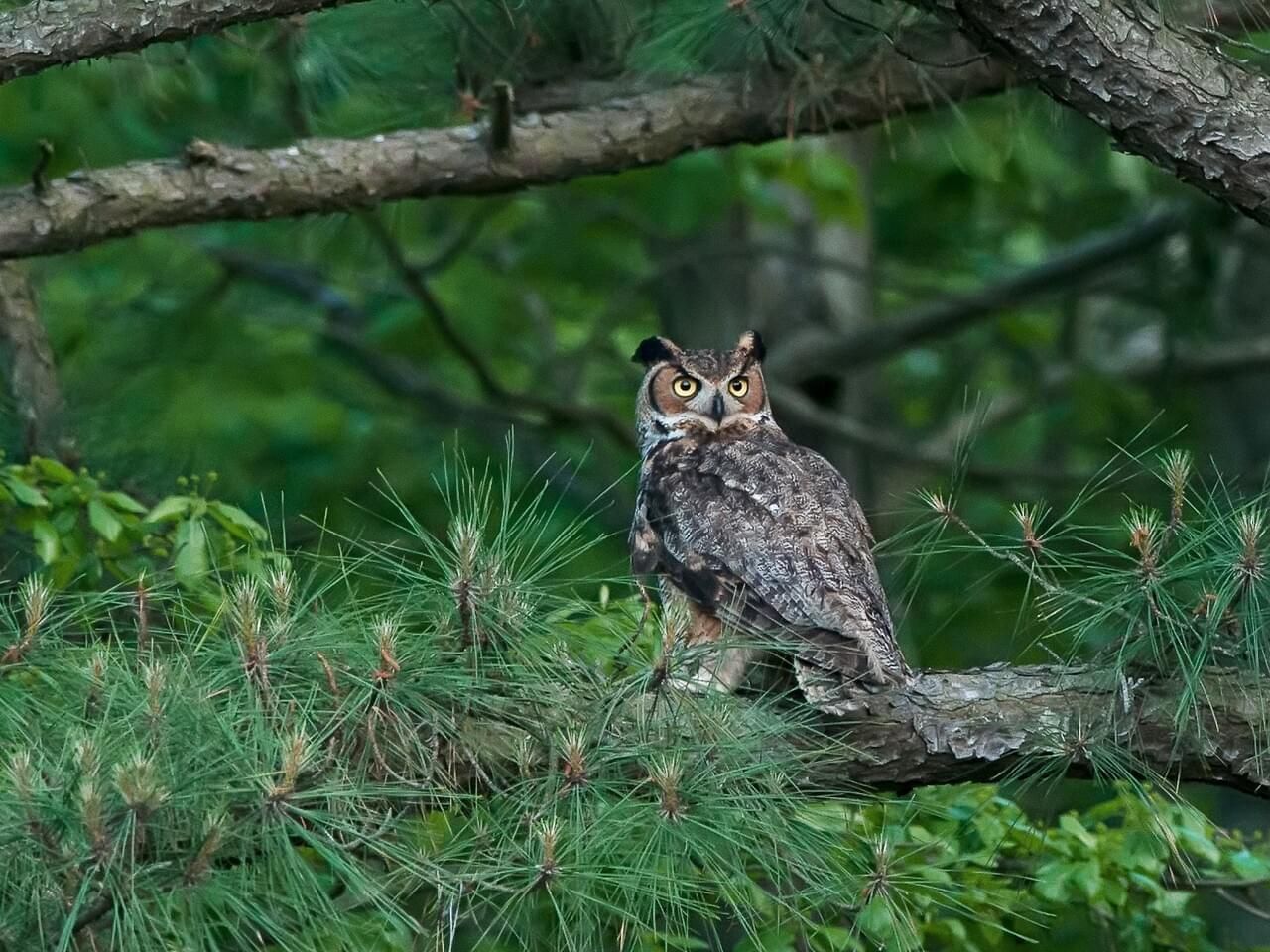
Happy #WildlifeWednesday! Whooooooo loves owls? Let's learn about the three most frequently seen owl species at TWC! The Great Horned Owl is the largest owl in Ohio and with its enormous yellow eyes, long ear tufts, and deep hooting call it is the classic owl that jumps to mind from storybooks and drawings. Its preferred habitat includes woods interspersed with fields and open areas, as well as swamps, wetlands, meadows, orchards, and agricultural land, making The Wilderness Center and its surrounding area an ideal location for it to call home. The Great Horned Owl is almost strictly nocturnal, with peak activity occurring after dusk and before dawn. This massive powerful owl is at the top of the bird of prey food chain and has no predators. The Barred Owl is a sizable owl with length measurements comparable to those of the Great Horned, but with only half the weight. The Barred Owl has dark black eyes, prominent facial discs, and lacks ear tufts. An extremely vocal owl, its call is described by the mnemonic “Who cooks for you, who cooks for you all?” Pairs will often perform duets with this song, vocalizing loudly for extended periods of time. The Barred Owl has a delicate and graceful flight style as it swoops through forests and prefers wooded areas over open spaces. While most active at night, the Barred Owl can sometimes be seen during the day roosting on tree branches and inside cavities. The Eastern Screech-owl is Ohio’s smallest and most common owl, occurring in all 88 counties. This small owl is about the size of an American Robin, though double the weight. It has wide yellow eyes, ear tufts, and can come in two color morphs, red or gray. Its vocalization is not actually a screech, but instead a combination of whistles, trills, and whinnies. The Eastern screech-owl is very adaptable and can occupy a wide variety of habitats, including woodlands, suburbs, urban areas, and woodlots. Its diet is more varied than any other North American owl, preying upon rodents, birds, insects, and worms. Be sure to visit us for the Enchanted Forest ! You never know whoooooooo you might encounter! Written by Michelle Leighty, TWC Environmental Education Specialist
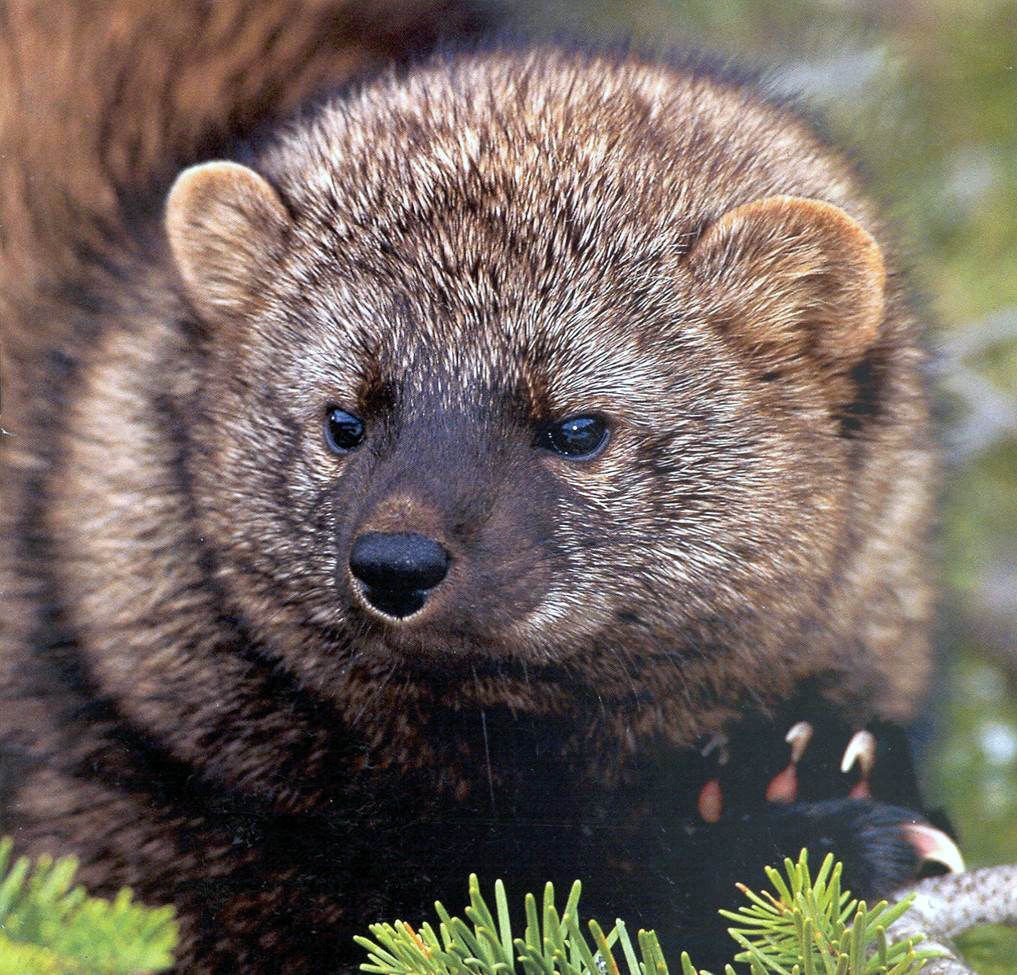
Fishers are returning to Ohio! Fishers were once common in Ohio- a native species. However, by the mid-1800s the fisher was extinct in Ohio. A victim of habitat loss, the forests they needed were cleared for agricultural land, and the fur trade. The first confirmed fisher sighting was in 2013. To date ODNR has received more than 40 confirmed fisher sightings across several counties, including Ashtabula, Columbiana, Cuyahoga, Geauga, Harrison, Jefferson, Lake, Mahoning, Trumbull, and Tuscarawas. Most of these sightings were in the last three years. Ohio is benefiting from the expanding fisher populations in our neighboring states. In the 1990’s fishers were re-introduced to Pennsylvania and West Virginia. From these two states fishers have been naturally migrating into Ohio. The forest habitat they depend on has been steadily returning to Ohio – nearly a million acres of forested land has been added to Ohio since 1970. Scientists also believe that Ohio fishers may be reproducing. Their belief is based on the examination of a pregnant female killed on the road. To date, no living young have been confirmed. So, what is a fisher? Fishers are nocturnal, carnivorous, fur-bearing, forest-dwelling mammals. Found only in North America, they are secretive, solitary hunters. They are sometimes referred to as “fisher cats.” However, they are not cats and they don’t eat fish. Fishers belong to the Mustelidae or weasel family. There is no definitive answer to why this animal is called fisher. It’s though that the name fisher is a lost-in-translation corruption of the name given to them by the early French fur-trappers. To them our weasel’s fur looked like the European polecat’s fur that they were familiar with. The French name for polecat is fiche. Over time fiche became fisher. Fishers are the second largest member of the weasel family in North America after the wolverine. They have long, slim bodies, short legs, rounded ears, thick brown to black fur and bushy tails. They have five toes on each foot and unsheathed, retractable claws. Their large feet allow them to move easily across snowpack. They are exceptional tree climbers. Fun fact: They can rotate their back paws almost 180 degrees – this allows them to descend trees headfirst. Not many mammals can do that! With its speed, agility, sharp claws, and teeth fishers are known to be extremely successful land and tree predators. They play an important role as mid-sized predators helping to control rodent populations. However, being opportunistic carnivores, their diet can adapt as needed to include birds, snowshoe hares, squirrels, reptiles, insects, carrion, vegetation and fruit. They are one of the rare animals that will hunt and kill porcupines. Fishers seem to be filling, at least in part, a role left vacant when top-tier predators, wolves for one, disappeared from their native ranges. Because fishers rely on connected, mature forests, protecting fishers also protects critical habitat for many other species – contributing to a healthy biodiversity. Forest ecosystems that include a healthy fisher population are a positive sign of a well-functioning, mature environment. So, fishers returning to Ohio is a very good thing, making our forest ecosystems one species stronger and more resilient. The fisher needs one more thing to succeed and thrive – the dark of night. Light pollution or skyglow can reach hundreds of miles from the urban area creating the pollution. It can reach into areas where fishers live and interfere with their hunting, mating, rearing their young – everything they do during the night. Light pollution is one challenge to the fisher’s success that everyone can do something about. Written by Robin Gill, Astronomy Education Specialist
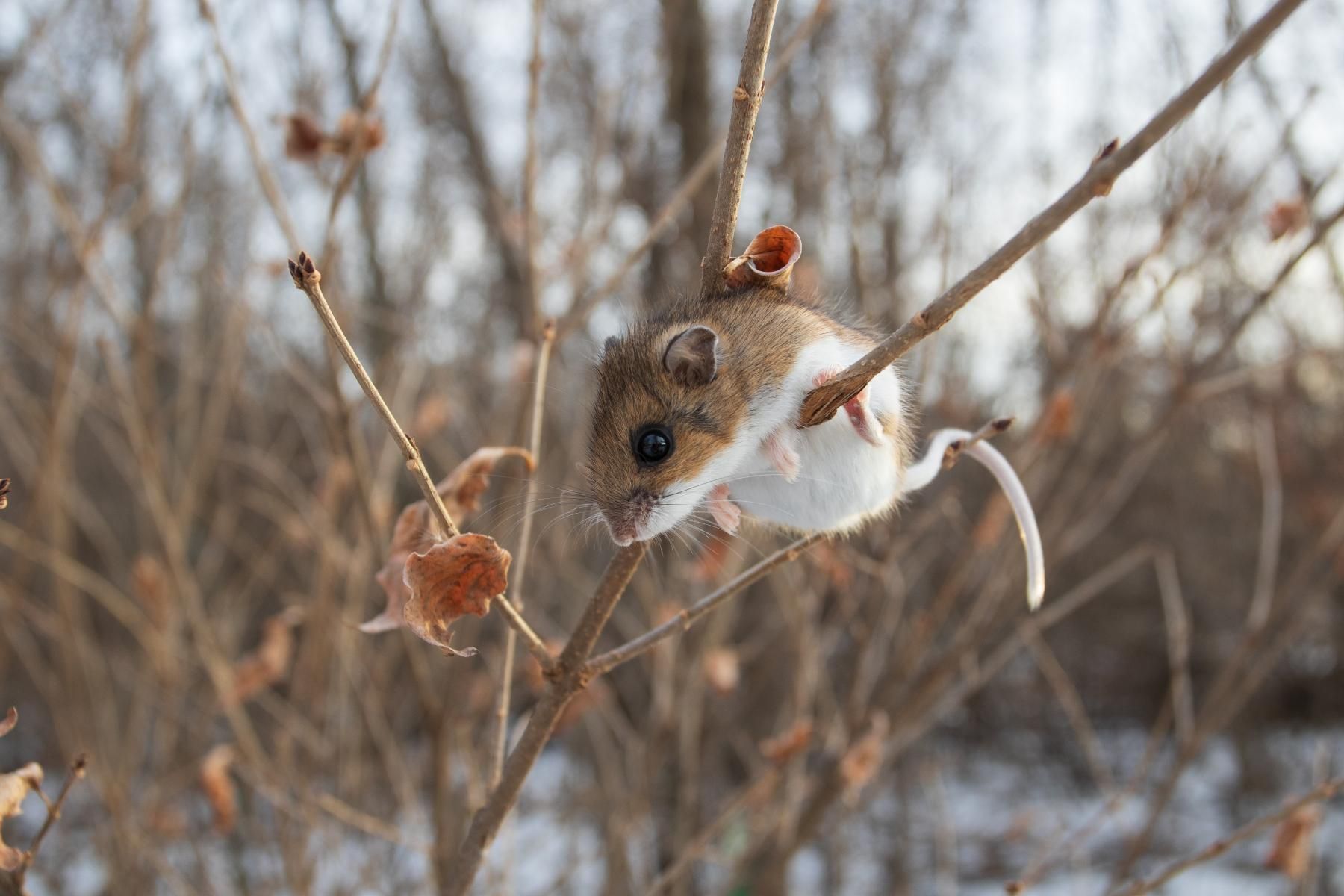
Happy #WildlifeWednesday! Let's talk about Ohio mice. Most of us are probably all too familiar with a cute but typically unwanted rodent guest, the house mouse. Though still considered a wild animal, the house mouse has adapted so well to living near humans that it is categorized as a synanthrope. Synanthropes benefit from living near human settlements and include animals such as brown rats, cockroaches, pigeons, gulls, geckos, spiders, and centipedes. The house mouse is accustomed to people to the extent that it has even been domesticated as the pet "fancy" mouse and as the laboratory mouse. But Ohio also is home to two species of deer mice, the eastern deer mouse and the white-footed mouse. These species are found in habitats such as fields, woods, forests, and agricultural edges. Deer mice get their name for two main characteristics: their two-toned fur coloration and their high agility. The fur coats are brown to reddish brown on the top of the animal, with stark white on the underside and belly, resembling the pattern of a white-tailed deer. They are athletic and nimble and able to gracefully leap and bound, also similar to a deer. Primarily nocturnal, deer mice are fairly social and will often nest together in groups of ten or more. They communicate through vocalizations, scent marking, grooming, and drumming. The drumming behavior is an alarm signal to other mice and is accomplished by stamping their forelegs on hard surfaces, hollow reeds, and dry leaves. They are omnivores, their diet including nuts, seeds, berries, fruit, insects, fungi, and carrion. They are known to stockpile enormous caches of food, particular seeds and nuts, for consumption during the winter. Be sure to keep your ears open for the drumming sound of a deer mouse in the Enchanted Forest ! Written by Michelle Leighty, TWC Environmental Education Specialist

This is the last in a series of Friday posts leading up to TWC’s Shapley Lecturer presentations being given on Thursday through Saturday, October 1st-3rd. On October 1st-3rd, 2026, The Wilderness Center is honored to host Harlow Shapley Lecturer Dr. Quyen Hart, Ph.D. She earned her Ph.D. from the University of Colorado Boulder. Her research has included binary stars, large galaxy clusters and their environments and active super-massive black holes at the center of galaxies in cluster environments. Dr. Hart is an astronomer, educator, and outreach professional with expertise in science communication and project management. She is currently the Project Scientist for the James Webb Space Telescope (JWST) Science Communications in the Office of Public Outreach (OPO) at the Space Telescope Science Institute (STScI) in Baltimore, Maryland. STScI is the operational home of the Hubble Space Telescope, the James Webb Space Telescope, and the Nancy Grace Roman Space Telescope, along with ever-growing data archives and public outreach. For over 20 years Dr. Hart has been actively involved in formal and informal astronomy education, providing unique learning experiences for people of all ages. Her extensive experience includes working on several projects for NASA’s Universe of Learning, including Girls STEAM Ahead and ViewSpace, and OPO outreach efforts for the Hubble Space Telescope, JWST, and now the Nancy Grace Roman Space Telescope, teaching astronomy and physics classes at the college level, organizing and hosting outreach events, and directing summer STEM camps for middle school children. She is passionate about sharing the wonders of astronomy and science with the general public because she knows that everyone can be a scientist! Dr. Hart’s presentation is titled “Rising Above: How Space Telescopes Rewrite Astronomy.” Her description for this talk is intriguing: “We've always been curious about what lies just beyond our horizons. But to truly explore it, we need to rise above Earth's atmosphere itself, which blurs and even blocks some forms of light. Space telescopes let us see the universe in every type of light there is. The Hubble Space Telescope opened the door, and the James Webb Space Telescope pushed it wide open, peering deeper into the darkness than we thought possible. And soon, the Nancy Grace Roman Space Telescope will join them, giving us an even wider view of the universe. How have space telescopes rewritten the astronomy textbooks? In this talk, we'll journey through the universe, uncovering some of the most ground-breaking discoveries made with space telescopes, and the new clues they've found about the origins of stars, planets, black holes, and galaxies.” Pick the lecture date and time that best fits you and join us on October 1st, 2nd, or 3rd for Dr. Hart’s Shapley Lectures . Registration is required. All Shapley Lecture activities are free – (all lectures, Friday evening planetarium show, and star watch.) Whether you’re a lifelong astronomy enthusiast, a student exploring a future in STEM, an educator, or simply someone who has ever looked up and wondered what’s out there, this is an opportunity you won’t want to miss. Written by Robin Gill, Astronomy Education Specialist
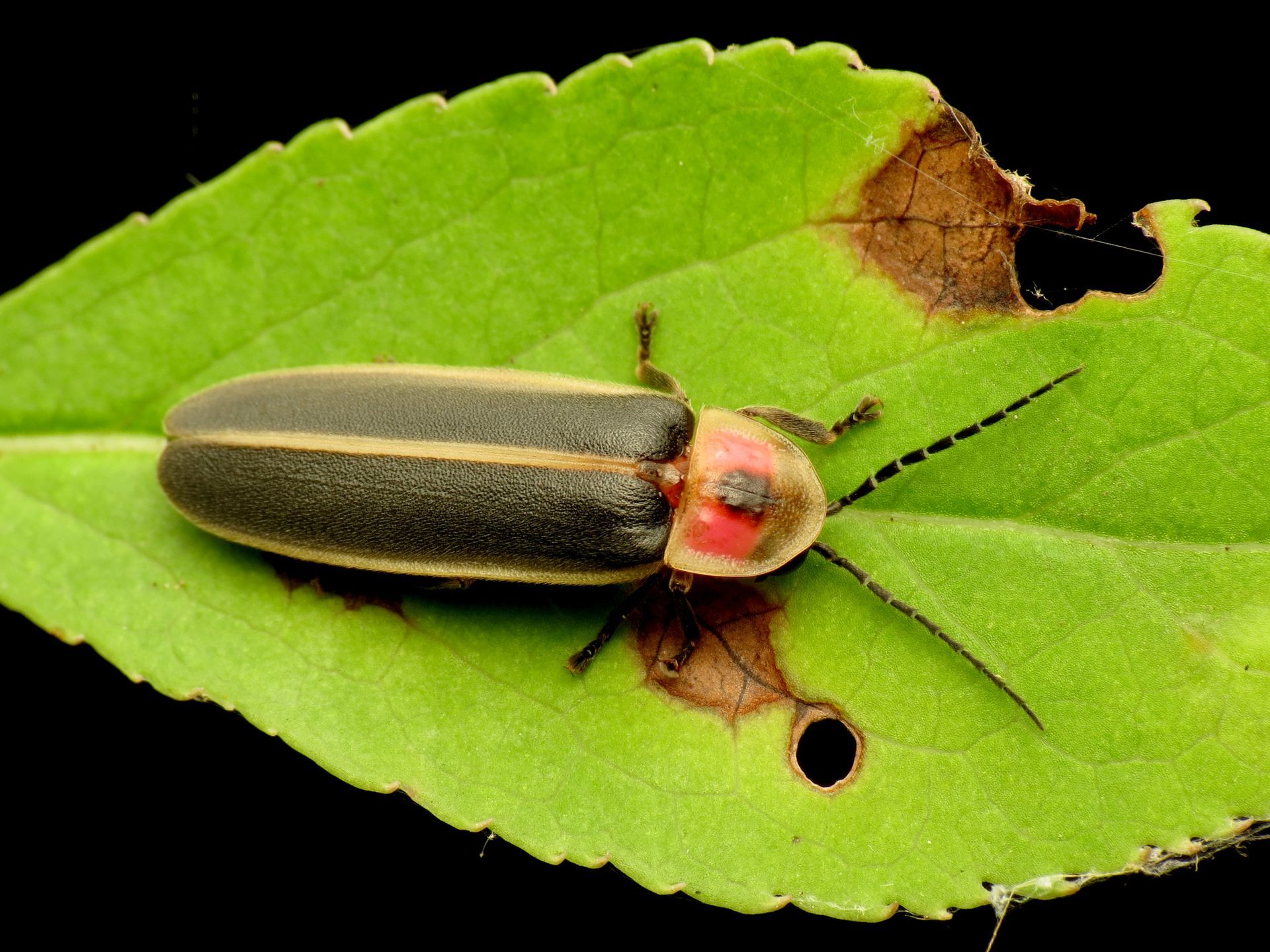
Happy #WildlifeWednesday! With summer officially over and fall beginning, let's bid farewell to an iconic nocturnal animal of summertime, the lightning bug! Lightning bugs are soft-bodied beetles that are also commonly referred to as fireflies. There are more than 2,000 species in the firefly (Lampyridae) family, with about 12 dozen species found in Ohio. Lightning bugs get their name from their ability to flash bright lights in the darkness, like a tiny bolt of lightning. All lightning bugs glow as larvae. They use this glow to warn predators that they do not taste good. The larvae eat snails, slugs, and worms. Lightning bugs produce their light through bioluminescence, light emitted due to a chemical reaction in a living organism. Bioluminescence is nearly 100 percent efficient and little energy is wasted to produce their light. Lightning bugs use their flashes to attract mates, and the light can be yellow, green, or orange in color. Lightning bugs can be seen in Ohio from late May through August, with peak activity occurring June through mid-July. Be sure to visit the Enchanted Forest for a last glimmering peak at a Lightning Bug until next year! Written by Michelle Leighty, TWC Environmental Education Specialist

This is the third in a series of Friday posts leading up to TWC’s Shapley Lecturer presentations being given on Thursday through Saturday, October 1st-3rd. The Wilderness Center is honored to host Harlow Shapley Lecturer Dr. Quyen Hart on October 1-3, 2026. The American Astronomical Society (AAS) Harlow Shapley Visiting Lecturers Program brings distinguished astronomers and astronomy educators to schools and communities across North America to share the wonder of the universe and inspire people to bring science into their lives. The Lecturers Program has been a long-running tradition for the Society. It grew out of AAS’s Visiting Professors Program dating back to 1958 and is named in honor of distinguished astronomer and former AAS President Dr. Harlow Shapley (1885-1972). Harlow Shapley was a farm kid from Missouri and the first in his family to attend college. He had not intended to study astronomy, but after taking his first course he was hooked. He got his undergraduate degree in Astronomy from the University of Missouri and his PhD from Princeton University. He served as director of the Harvard College Observatory from 1921 to 1952. During this time his groundbreaking research transformed our understanding of the size of the Milky Way, identifying the true location of the Sun in our galaxy’s outer disk and not at the center of the galaxy as was believed at the time. Shapley participated in the “Great Debate of 1920” over the nature of “spiral nebulae” – what we now call galaxies – were they a part of the Milky Way or their own “island universes” far outside the Milky Way. This issue and debate helped shape the modern concept of the galaxy and began extragalactic astronomy. Shapley was one of three founding lecturers in the AAS Visiting Professors Program, which received intermittent funding from the National Science Foundation from 1958 to 1971. Upon Shapley’s passing, a private donation from the Perkin Fund – established by Richard Scott Perkin, a close friend of Shapley for more than three decades – enabled AAS to continue the Visiting Professors Program beyond the end of federal support. Now renamed in Shapley’s honor, the Harlow Shapley Visiting Lectures Program honors his legacy by continuing his lifelong mission to bring astronomy to broader communities. Check the Shapley Lecture details, pick the lecture date and time that best fits your interest, and join us on October 1st, 2nd, or 3rd for Dr. Hart’s lecture, Rising Above: How Space Telescopes Rewrite Astronomy. Registration is required. All Shapley Lecture activities are free – all lectures, Friday evening planetarium show, and star watch. Whether you’re a lifelong astronomy enthusiast, a student exploring a future in STEM, an educator, or simply someone who has ever looked up and wondered what’s out there, this is an opportunity you won’t want to miss. Written by Robin Gill, Astronomy Education Specialist
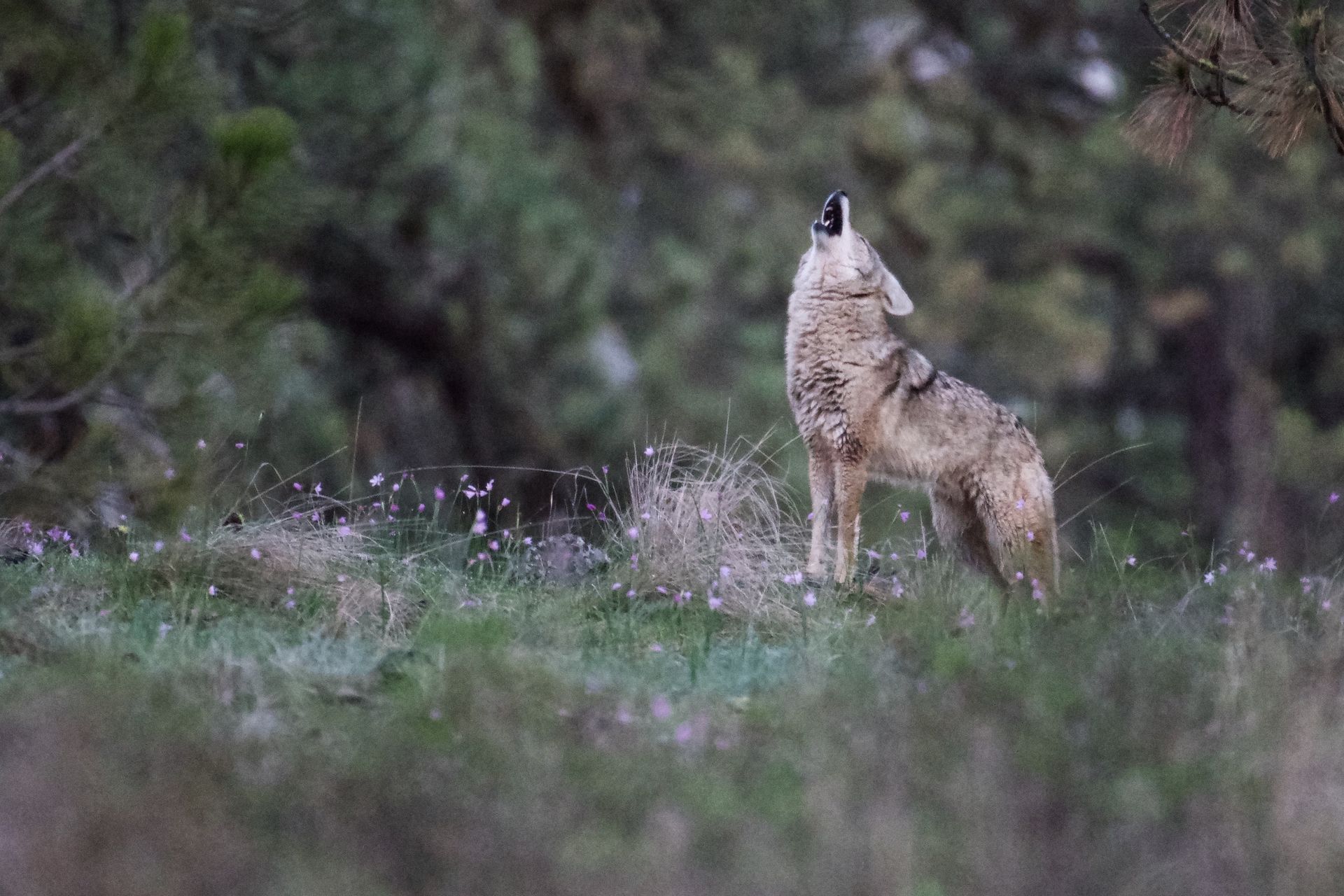
Happy #WildlifeWednesday! Awwwooooo! Yip-yip! What's that sound? It's the howling of Ohio's most musical wild canine species, nicknamed the song dog, but otherwise known as the coyote! The coyote is a medium-sized member of the dog family that is found throughout the state, occurring in all 88 counties. The slender canine has pointy ears and snout and resembles a domestic dog such as a German shepherd or collie. The tail is carried downward at a 45 degree angle as it moves and is bushy with a black tip. Its yellow eyes are a distinguishing feature. Adults weigh an average of 20-40 pounds. The coyote is a highly adaptable and clever animal and can make its home in a variety of habitats, including open spaces, woodlands, agricultural land, suburban parks and golf courses, and large cities. Its ability to use any habitat to its advantage is one reason it is so successful. It is omnivorous, eating mostly rodents, rabbits, birds, deer (typically fawns), fruit, berries, and vegetation. The coyote is described as the most vocal of wild North American mammals, and its scientific name Canis latrans means “barking dog.” The wide assortment of barks, woofs, huffs, whines, yelps, growls, and howls is used for communication, and the iconic group yip-howl song is thought to be part of an elaborate greeting ceremony. Be sure to visit the Enchanted Forest on October 9th and 10th to meet the coyote and even hear a snippet of its song! Written by Michelle Leighty, TWC Environmental Education Specialist